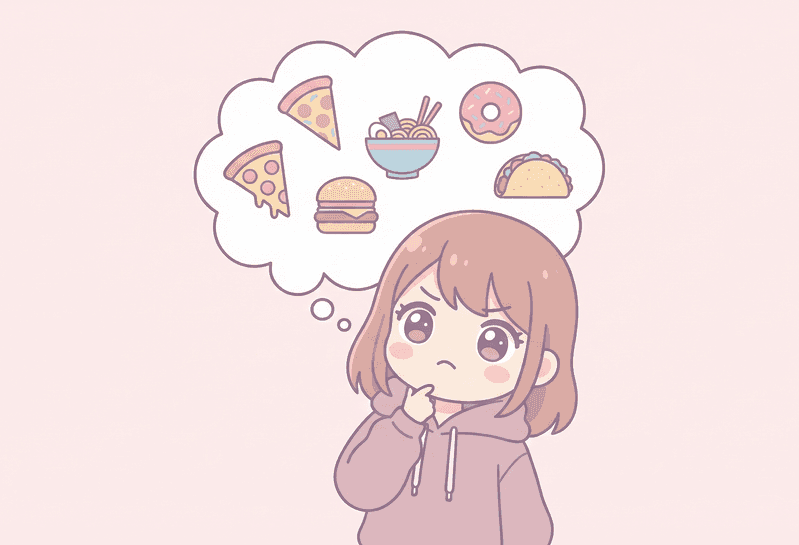
The Daily Question: "What Should I Eat Today?"
As lunchtime approaches, a familiar dilemma inevitably arrives: "What should I eat today?" You're clearly hungry, and you seem to have some idea of what you want, but when it comes time to decide, your mind goes blank. Everyone has experienced this at some point.
What's interesting is that this phenomenon isn't simply due to an indecisive personality. Modern psychology explains this through the concept of 'Decision Fatigue'. Our brains have a limited capacity for making decisions each day, and once we exceed that limit, even the simplest decisions become difficult.
What Is Decision Fatigue?
Decision fatigue is a concept proposed by American social psychologist Roy Baumeister. According to his research, our willpower and decision-making ability tire out like a muscle the more we use them. After waking up in the morning and making countless decisions about what to wear, which route to take to work, how to respond to emails, and so on, our brain becomes exhausted by lunchtime.
In fact, one study analyzed parole decisions made by judges. Surprisingly, the parole approval rate for cases heard in the morning was 65%, while cases heard just before lunch had approval rates close to 0%. This is the power of decision fatigue.
Why Food Choices Are Especially Difficult
So why do food choices feel particularly challenging? There are several psychological reasons.
1. Too Many Options
Psychologist Barry Schwartz discusses the 'Paradox of Choice'. We assume that more options will make us happier, but the opposite is true. Too many choices actually make decisions harder, and even after deciding, we're left with regret thinking "I should have chosen something else."
In modern cities, the variety of food available to us is virtually limitless. Korean, Chinese, Japanese, Western, street food, fast food, health food... When you open a delivery app, hundreds of restaurants appear. Facing all these options, our brains naturally become overwhelmed.
2. Food Is Connected to Emotions
Choosing food isn't just about nutrition. We find comfort through food and use it to change our mood. Thoughts like "I had a hard day, so I deserve something delicious" add emotional elements to food selection. These emotional factors make decisions more complicated.
3. The Conflict Between Health and Pleasure
The internal conflict of "healthy food vs. tasty food" also makes food choices difficult. The situation where you feel you should eat a salad but crave fried chicken, or you're on a diet but feel tempted by late-night snacks. In these conflicting situations, our brains expend more energy.
4. Social Considerations
Unlike eating alone, when eating with others, you have to consider their preferences. "This person can't eat spicy food...", "That person has a seafood allergy..." When these social considerations are added, decisions become even more complex.
Ways to Reduce Decision Fatigue
So how can we reduce this decision fatigue? Here are some practical methods.
- Reduce Your Options: Use favorites on delivery apps or create a list of go-to restaurants. Pre-limiting your options makes decisions much easier.
- Create Routines: Setting up a weekly menu like "Monday is soup day, Tuesday is rice bowl day" is helpful. Just like Steve Jobs wore the same outfit every day, automating small decisions allows you to focus on what matters.
- Use Random Selection: When you absolutely can't decide, try flipping a coin or using a wheel spinner. Interestingly, if the random result makes you think "No, not that," it's actually a hint about what you really want.
- Don't Decide When You're Too Hungry: Judgment becomes clouded when you're extremely hungry. If possible, decide on your next meal when you're slightly full.
Conclusion: There Is No Perfect Choice
The difficulty in choosing food is not your fault. It's a natural phenomenon created by the countless options modern society presents and the limitations of our brains.
The important thing is to accept that there is no "perfect choice." Whatever food you choose, if you enjoy it in the moment, that's the best choice. Don't overthink it. And if you really can't decide, What to Eat is here to help!
"Not deciding is the worst decision. Just choose, and enjoy your choice."
Having trouble deciding what to eat?
Let What to Eat choose today's menu for you
Get a Recommendation