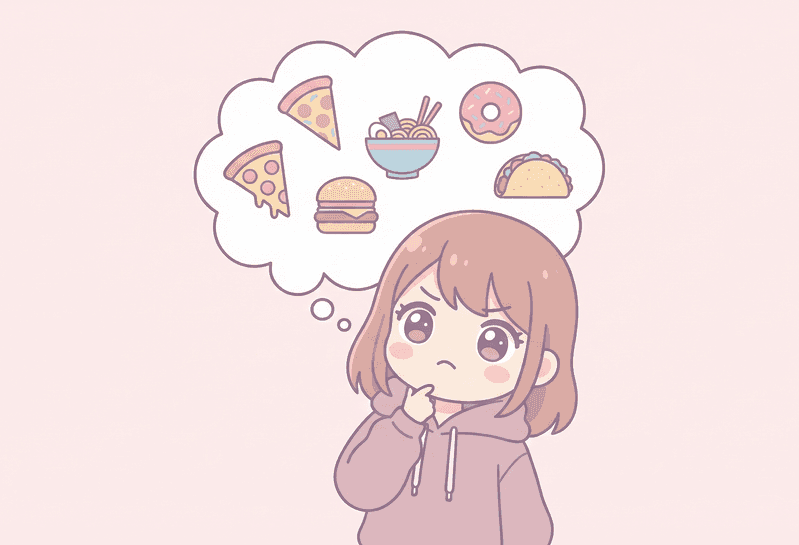
We Don't Choose Food Based on Hunger Alone
Have you ever said "I'm hungry, let's just eat anything" only to find yourself agonizing over what to actually eat? The truth is, our food choices aren't determined simply by hunger. Various psychological factors work together in complex ways to ultimately decide what we eat.
In this article, we'll examine the 5 major psychological factors that influence food choices, and by understanding these, learn how to make better food decisions.
1. Emotional State
Our emotions are one of the biggest factors influencing food choices. The term 'Emotional Eating' exists precisely because mood and food selection are closely connected.
When We're Stressed
When cortisol, the stress hormone, is released, our bodies crave high-calorie, high-fat foods. This is why we gravitate toward fried chicken, pizza, and instant noodles when stressed. These foods temporarily activate the brain's reward system, making us feel better.
When We're Happy
Conversely, when we're in a good mood, we're more likely to choose healthier foods. We also tend to try new foods or have slightly more special meals than usual. The phrase "I'm in a good mood, let's eat something delicious!" reflects this psychology.
2. Social Influence
Our food choices change significantly depending on who we're eating with. This is called 'Social Facilitation'.
- With close friends: Tendency to choose foods you've been craving, foods that make you forget about your diet
- With work colleagues: Safe and popular menus, nothing too expensive
- On dates: Preference for neat-to-eat foods, dishes with ambiance
- With parents: Healthy and hearty foods, typically traditional cuisine
Additionally, if the people we're eating with eat a lot, we tend to eat more too, and if they eat less, we eat less as well.
3. Memory and Experience
Past experiences have a powerful influence on present food choices. Memories of foods we ate as children, or memories of food from special occasions, shape our preferences for those foods.
For example, the kimchi stew that your mother often made when you were young isn't just food; it becomes a symbol of warmth and security. When you're struggling or need comfort, you naturally think of that dish.
Conversely, foods that once made us sick are avoided for a long time on the same principle. If you got food poisoning from seafood, you'll likely avoid seafood for a while afterward.
4. Environment and Context
Our food choices differ depending on where we are and what situation we're in.
Physical Environment
- Weather: Hot soup on cold days, cold noodles or ice desserts on hot days
- Location: Quick bites at airports, local cuisine at tourist destinations
- Time: Light foods in the morning, hearty foods at night
Psychological Context
- When busy: Quick and convenient food choices
- When relaxed: Foods to enjoy slowly, trying new things
- On special days: More upscale or meaningful foods than usual
5. Health Consciousness and Self-Control
Food choices vary according to one's level of health awareness. People who are dieting or health-conscious consider calories, nutrients, and ingredient freshness when selecting food.
Interestingly, self-control is also a limited resource. After a day of focusing in meetings and making difficult decisions, we become more susceptible to temptation at dinner rather than choosing healthy options. The rationalization "I had a hard day, so I can have fried chicken" is exactly this phenomenon.
There's also something called the 'Health Halo Effect.' When labels like 'organic,' 'low-calorie,' or 'natural' are attached, we feel like we've made a healthier choice regardless of whether it actually is healthy.
Tips for Making Better Food Choices
Now that we understand these psychological factors, we can use them to make better choices.
- Recognize emotional eating: Ask yourself "Am I actually hungry, or do I just want to eat because of my mood?"
- Plan ahead: If you plan meals when your willpower is strong, you can make good choices even when tired.
- Create the right environment: Make healthy foods easily accessible and keep tempting foods out of reach.
- Sometimes just enjoy: You don't need to make the perfect choice every time. Sometimes eating what you want is good for your psychological health.
Conclusion
Our food choices go through a much more complex process than we think. Emotions, social situations, past experiences, environment, and health consciousness all intertwine to ultimately create the answer to "What should I eat today?"
Understanding these factors helps us better understand our eating habits and make better choices when needed. But the most important thing is to enjoy whatever you eat in the moment!
What menu matches your mood today?
Let What to Eat recommend the perfect menu for your situation
Get a Recommendation